The Benefits of Workflow Automation for Higher Education
Last updated on March 10, 2026
Published on March 10, 2026
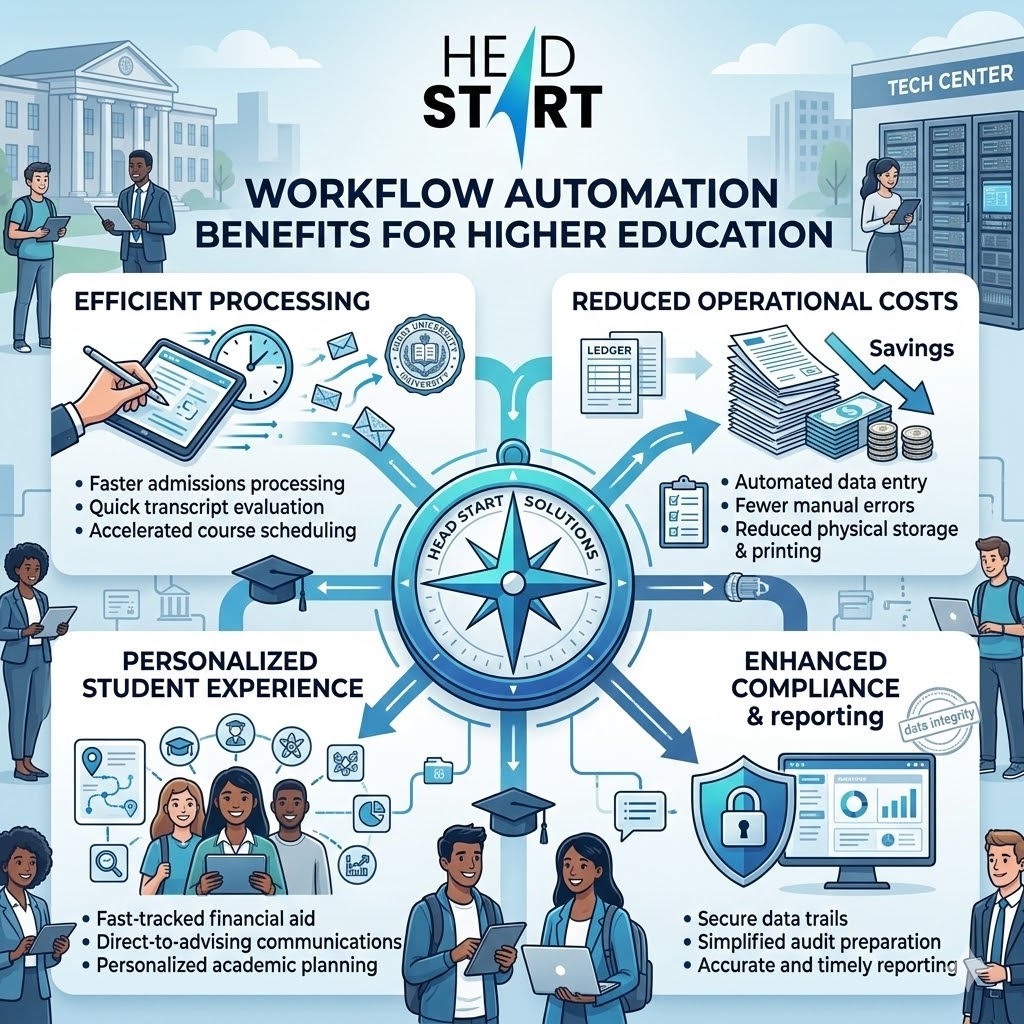
Higher education is going through a quiet but powerful shift. While classrooms are becoming smarter and learning is going digital, the real transformation is happening behind the scenes, in admissions offices, examination cells, HR departments as well as student support desks. This shift has a name- education workflow automation.
If you’ve ever waited weeks for an admission update, chased signatures for documents or watched faculty drown in admin work, you already know why higher education workflow automation isn’t just a trend, it’s a necessity.
Let’s break down what it actually means, why universities are adopting it so fast and the real benefits of workflow automation for educational institutions.
What Is Education Workflow Automation?
Education workflow automation is the use of digital tools to automate repetitive, rule-based processes across academic as well as administrative functions. Institutions use automated systems that move tasks forward automatically instead of relying on emails, spreadsheets, paper forms & manual approvals
Think of processes like-
- Sending communications to students after every step during their admission process
- Entrance examination allotment
- Scholarship availed communication
- Offer letter release
- Sending students’ data to ERPs
- Admissions approvals
Automation ensures these workflows happen faster, cleaner and with fewer errors, without staff constantly chasing follow-ups.
Why Higher Education Workflow Automation Is No Longer Optional
Universities today are under pressure from all sides-
- Rising student expectations
- Increasing compliance and accreditation requirements
- Faculty burnout due to administrative overload
- Competition from tech-driven global institutions
According to McKinsey & Company, organisations that automate core workflows can reduce operational costs by up to 30% while significantly improving service quality. Higher education is no exception.
That’s where workflow automation steps in.
Core Areas Where Education Workflow Automation Makes a Difference
- Admissions and Enrolment Management
Admissions are often the most chaotic process in any institution. Automation helps by-
- Auto-routing applications and documents for review
- Sending real-time status updates to students
- Triggering offer letters and fee payment links
- Reducing manual data entry errors
The result? Faster decisions, happier applicants & fewer abandoned applications.
- Student Lifecycle Management
From day one to graduation, students interact with a number of departments. Automated workflows ensure-
- Smooth entrance examination process
- Automated offer letter release and scholarship waivers
- Easy hostel allotments
- Seamless onboarding after admissions
A Deloitte study found that institutions using automated student workflows improved student satisfaction scores by over 20%.
- Faculty and Staff Administration
Faculty members didn’t sign up to chase paperwork. Workflow automation-
- Simplifies the document verification process
- Hassle-free merit list generation
- Streamlines appraisal and promotion cycles
This directly reduces faculty burnout as well as frees up time for teaching and research.
- Examination and Assessment Processes
Manual exam workflows are risky, one mistake can impact hundreds of students. Automation helps institutions-
- Schedule entrance examinations efficiently
- Automated results compilation
- Publish scores securely and on time
- Transfer to next steps automatically
This not only improves accuracy but also builds trust with students.
Benefits of Workflow Automation for Education Institutions
Let’s get into the real, tangible benefits, not just buzzwords.
- Faster Turnaround Times
Automated workflows remove delays caused by manual handoffs. Tasks that once took weeks can now be completed in days & even hours.
Example- Automated document verification can cut admission processing time by 40–60%.
- Reduced Operational Costs
Automation minimises paperwork, repetitive tasks and manual errors. According to industry data, institutions can save ₹20–30 lakh annually just by automating admissions and finance workflows at mid-sized campuses.
- Better Student Experience
Today’s students expect Amazon-level efficiency. Automation delivers-
- Real-time notifications
- Transparent processes
- Fewer office visits and follow-ups
Happy students mean better retention along with stronger word of mouth.
- Improved Compliance and Audit Readiness
Accreditation bodies demand accurate data and traceable processes. Automated workflows-
- Reduce compliance risks
- Maintain digital audit trails
- Ensure policy adherence across departments
This is especially critical for NAAC, NBA and international accreditation frameworks.
- Data-Driven Decision Making
Automation does not just move tasks. It captures insights. Institutions gain access to-
- Faculty workload data
- Admission funnel analytics
- Student performance trends
This allows leadership to make smarter, faster decisions backed by real data.
Higher Education Workflow Automation and the Future Campus
The future university isn’t just smart classrooms and online learning platforms. It’s an intelligent campus where systems talk to each other, decisions happen automatically and humans focus on what actually matters.
With AI and low-code automation platforms entering education tech, workflows are becoming-
- Predictive- flagging at-risk students early
- Personalised- tailored communication journeys
- Scalable across multi-campus institutions
In fact, Gartner predicts that by 2027, over 70% of organisations will rely on automated workflows for core administrative functions.
Getting Started with Education Workflow Automation
For institutions considering this shift, the key is to-
- Start with high-impact processes- admissions, finance, student services
- Choose flexible, education-focused automation platforms
- Involve faculty and staff early to drive adoption
Automation works best when it supports people, not replaces them.
Why Choose Headstart for Workflow Automation
Choosing the right automation partner matters, especially in education, where communication, timing & follow-ups can make or break experiences. Headstart focuses on simplifying complex workflows while keeping interactions personal, organised and easy to manage for education teams.
Here is what makes Headstart a compelling choice-
Trigger-Based Automated Workflows
Set up workflows that automatically send reminders, follow-ups and status updates based on real actions without any hassle.
Multi-Channel Communication Built-In
Talk to students where they are, SMS, WhatsApp, email, all within the same system, with every interaction stored in one place.
Personalised Engagement, Not Generic Automation
Use data to tailor messages and follow-up actions so your communication feels human, not robotic.
Less Manual Work, More Meaningful Connections
Routine tasks like scheduling, appointment management as well as lead nurturing are taken off your team’s plate so they can focus on high-value conversations
Built for Education, Not Generic Business Automation
Headstart is designed with educational institutions in mind, meaning workflows align with real academic processes.
In short, Headstart doesn’t just automate; it enhances your admissions and communication ecosystem so your team isn’t just faster, but more effective and connected too.
Final Thoughts
Education workflow automation isn’t about technology for the sake of technology. It’s about removing friction, reducing stress and building institutions that can grow without breaking. In a world where students demand speed, transparency and convenience, higher education workflow automation has become the backbone of modern campuses. Institutions that embrace it today won’t just operate better, they’ll lead the future of education.
FAQs
What is education workflow automation?
Education workflow automation means using digital systems to handle repetitive academic and administrative tasks automatically, so staff don’t have to manually track emails, approvals, reminders or student updates.
How does workflow automation improve admissions processes?
It speeds up application reviews, sends instant status updates, triggers offer letters automatically and reduces manual errors, making the whole admission journey smoother for both students and admin teams.
Is workflow automation only useful for large universities?
Not at all. Even small and mid-sized institutions benefit from automation because it saves time, reduces paperwork and helps teams manage growing student numbers without hiring extra staff.
Will automation replace administrative staff in colleges?
No, it’s designed to support teams, not replace them. Automation handles routine tasks so staff can focus on student support, strategic planning and more meaningful interactions.